





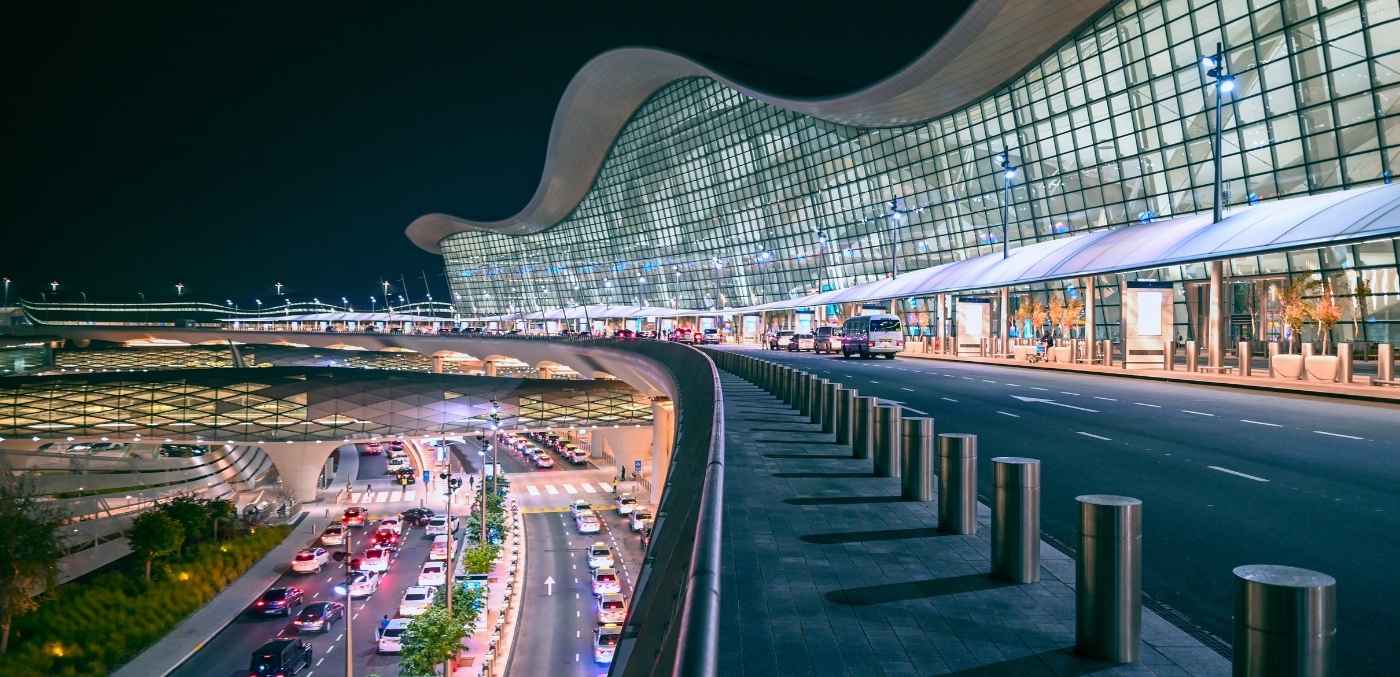
The conflict in the Middle East is affecting aviation and tourism, causing delays, diversions, cancellations and new travel warnings.
The US and Israel launched a strike on Iran on Saturday, 28 February 2026, attacking Iran’s military and nuclear infrastructure and allegedly killing Iran’s Supreme Leader, Ayatollah Ali Khamenei. Reports indicate Iran later launched retaliatory attacks towards Israel, then targeted US military bases in Qatar, Kuwait, the United Arab Emirates and Bahrain. The attacks have caused damage at Dubai, Abu Dhabi and Kuwait airports. Two hotels in Dubai, The Fairmont Hotel on Palm Jumeirah and Burj Al Arab, also sustained damage from shrapnel because of air forces intercepting incoming missiles.
The Gulf airspace is closed
Airspace over Iran, Iraq, Kuwait, Israel, Bahrain, The UAE, Syria and Qatar are empty of commercial flights, while Dubai, Abu Dhabi and Doha airports are closed. It’s the largest disruption in aviation seen in recent years, with thousands of flights delayed, cancelled or rerouted due to the conflict – including those not destined for the Middle East – leaving many passengers stranded or anxiously awaiting clarity as their travel plans remain in limbo.
Advice for Australians
Smartraveller reports attacks, escalation and reduced security are possible across the Middle East due to the conflict and now advises Australians do not travel to most destinations, including Bahrain, Iran, Iraq, Israel, Kuwait, Lebanon, Palestine, Qatar, Syria, the United Arab Emirates and Yemen. Australians should reconsider the need to travel to Jordan, Oman and Saudi Arabia. The Australian government reports that contingency plans are underway if commercial flights do not resume soon, but that Airlines flying between Australia, the Middle East, Europe and the UK are still in operation, but rerouting flights to avoid conflict zones and taking slightly longer flight paths.
What this means for travellers
Current industry advice says travellers should not panic and/or cancel flights or contact your travel agent unless you are travelling within 48 hours’ time. Travellers should wait for their airline or travel agent to contact them until such time, in order to preserve any consumer rights as they may pertain to insurance, cancellations, refunds and credits.
What travellers need to do right now
- Check Smartraveller for the latest warnings and updates
- Follow and/or register with DFAT (if eligible) for advice and updates
- Check your airline’s website, social media and app for updates
- Document any and all changes, including saving emails, receipts, confirmations, notifications and correspondence from your airline or travel agent
- Those who are already in the Middle East should stay in a safe place and limit unnecessary movements
- Follow instructions from local authorities
- Make plans to leave the Middle East if possible and safe to do so
- If you cannot, or choose not to leave, shelter in a safe place
- Follow local and international media to stay informed
Affected airlines
- Qatar Airways flights to and from Doha
- Emirates to and from Dubai
- Etihad Airways to and from Abu Dhabi
- Virgin Australia to Doha
- Air India
- Turkish Airlines
- Delta Airlines
- KLM
- United Airlines
- Lufthansa
- Pegasus Airlines
- Air France
- Transavia
- Virgin Atlantic
- British Airways
- Wizz Air
- LOT
- Air Canada
- Aegean Airlines
- Air Astana
- Gulf Air
- Royal Jordanian
- Oman Air
Good to know
Gulf-based carriers such as Emirates, Qatar Airways and Etihad Airways have no legal obligation under local law to provide hotels, meals or transfers to stranded passengers.
Emirates advises travellers booked to travel on or before 5 March 2026 can choose between rebooking an alternate flight or requesting a refund, and to do so at your point of purchase.
Etihad advises passengers due to travel on 2 March 2026 check their flight status before departing for the airport. Travellers with tickets issued on or before 28 February 2026, with original travel dates up to 7 March 2026, may rebook free of charge onto Etihad-operated flights up to 18 March 2026. Guests on all Etihad flights until 3 March 2026 may request a full refund at etihad.com/en/help/refund-form or through their travel agent.
Qantas is offering a fee-free refund, a fee-free Flight Credit (fare difference may apply) or fee-free date change for flights booked on or before 1 March 2026 for travel between 1 March and 5 March 2026 for passengers booked on flights to/from or via the UAE, Qatar, Israel, Jordan and Oman through Qantas on partner airlines.
Useful links
- Australian Department of Foreign Affairs and Trade Crisis Hub
- Department of Foreign Affairs and Trade Crisis Registration
- Smartraveller Middle East Middle East Conflict Portal
- Smartraveller Global Travel Impacts of Conflict in the Middle East Alert
- Australian Embassies and Consulates Overseas
- ACCC Flight Cancellation Rights
Be the first to see more exclusive online content by subscribing to the enewsletter below.