




Mount Everest rises like a beacon as Cathy Wagstaff ventures into the Himalayan Kingdom of Bhutan, where happiness is a national treasure, forests are sacred and ancient traditions flow as deep as its valleys.
It begins in the clouds somewhere between Kathmandu and Paro, as our Drukair commercial flight glides through cobalt skies, the jagged white peaks of the Himalayas rising into view. Mount Everest stands sentinel among them, shimmering in the thin light, and for a few spellbinding minutes it feels like a private scenic charter.
The landing into Paro, Bhutan’s only international airport, is as dramatic as the approach: a steep descent through mountain folds, the valley floor rising swiftly to meet us.
Known to its people as Druk Yul, the ‘Land of the Thunder Dragon’, Bhutan feels, even in this first breath of arrival, like arriving in a living fable. The airport showcases richly carved woodwork, vibrant frescoes and mural depictions of myth and legend.
The air is startlingly clear, the mountains sharp-edged against an unbroken sky. Tourism here is measured in intention, not volume. Visitor numbers are capped, and tourists must travel with a licensed operator and pay a sustainable development fee of US$100 per person per day – a contribution that supports the nation’s healthcare, education and conservation efforts.
Ventours
I am travelling with Ventours, an upmarket tour operator that has balanced cultural immersion with indulgent comfort in two extraordinary hotels over our curated, five-day journey. My companions for the next four days are a lively group of eight travel advisors, two outstanding Ventours guides and the owner of the Australian representation company – a dynamic mix that quickly proves to be great fun. Our local guide, Bap, shares his deep knowledge and passion for Bhutan each day along with his warm smile and impeccable gho (the traditional garment for men), and driver Sangey, ever-patient on winding roads, greets us with the phrase I’ll hear often: “No hurry, no worry.”
Founded in 1986, Ventours International Travel emerged to create truly bespoke journeys rooted in passion, expertise, and local insight. Over the decades, Ventours has grown with headquarters in Mumbai and offices across key destinations including Delhi, Jaipur, Udaipur, Varanasi, Agra, Kathmandu, and Thimphu. As the leading operator of trips into Bhutan and Nepal, Ventours offer unmatched presence in the region and with meticulous quality control to ensure every detail of your journey is seamless, guided by our passion, deep local insights, and relentless pursuit of excellence.
New heights, no lights
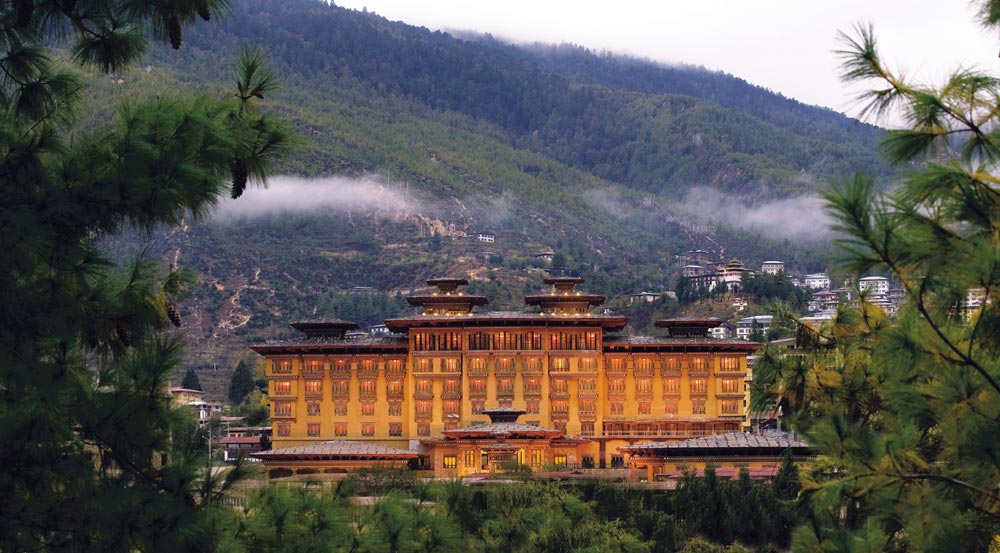
An hour’s drive from Paro delivers us to Thimphu, one of only two national capitals in the world without a traffic light. Instead, in the main street a police officer in a crisp uniform directs cars from the centre of a decorated rotunda. Mules amble along the roadside. Pine-covered hills roll away in every direction. My base is Pemako Thimphu, a hotel styled like a traditional dzong (monastery) in the heart of the city. Its central location makes exploring effortless while, inside, elegant Bhutanese flourishes are everywhere – hand-carved timber, colourful murals and warm, attentive service. On my first night, the hotel dresses our group in kira (traditional dress for women) for a Bhutanese dance performance before a lavish feast, a riot of colour, flavour and texture that feels like a celebration.
Daytrips from Thimphu
We spend the following day hiking into the hills to Tango Monastery, a 12th-century centre of Buddhist learning reached via a pine-scented trail. The climb is supposedly gentle, though the steady incline and thinning air make it a more spirited challenge than expected. Along the way we pass red-robed monks descending the mountain and pause often to take in the spectacular views of both the surrounding peaks and Thimphu Valley below.
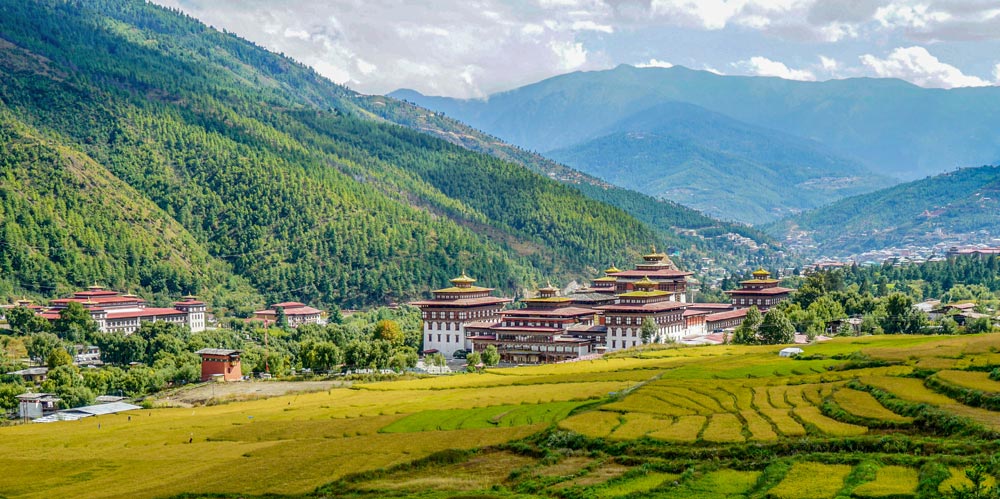
From here, it’s a short drive to Kuensel Phodrang Nature Park, where Buddha Dordenma, the world’s largest sitting Buddha, rises 54m above the southern approach to Thimphu, its bronze form gilded in gold and gazing serenely across the valley. Later, we continue to the northern edge of the city to explore Tashichho Dzong, the ‘Fortress of the Glorious Religion’. With its whitewashed walls, golden spires and immaculate courtyards, it serves as both the seat of Bhutan’s government and the summer residence of the central monastic body, a place where politics and spirituality share the same space in perfect equilibrium.
Into the clouds
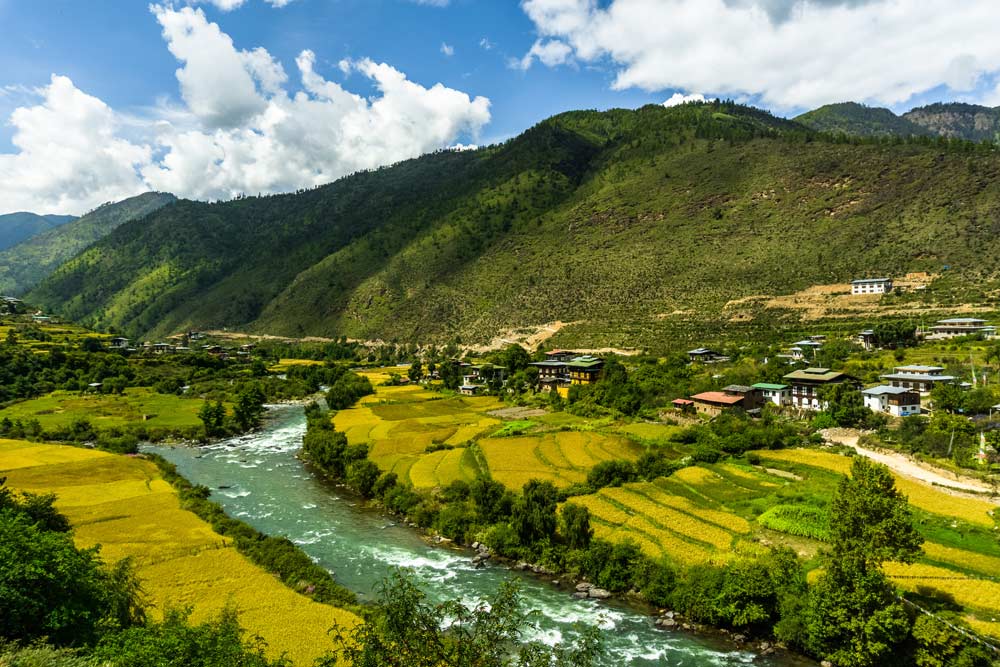
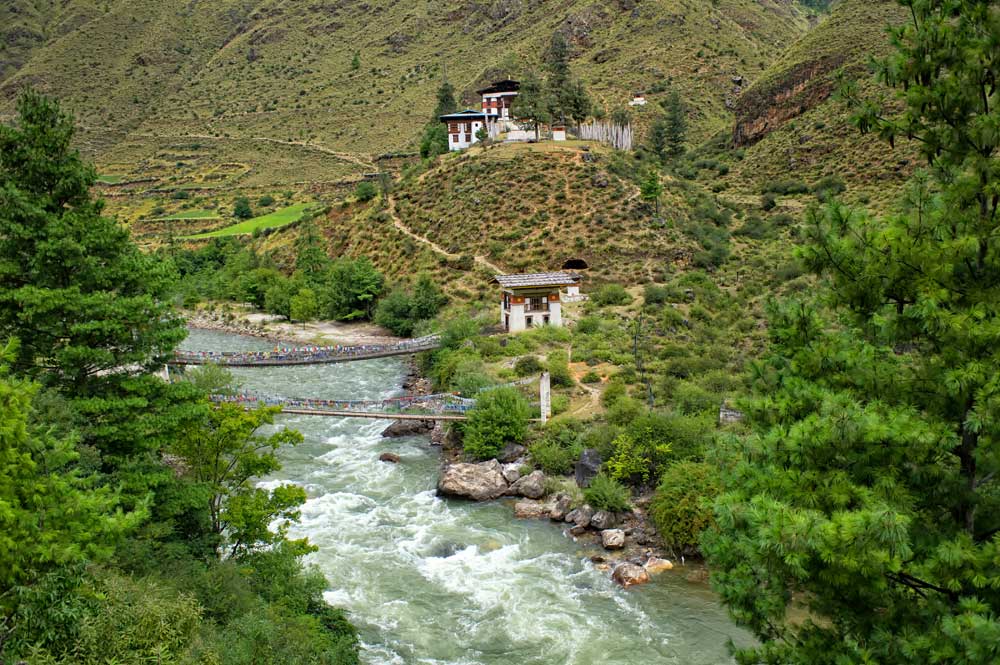
The road west to Paro curves through forests and farmland, the glacial-fed Paro Chhu river running alongside. Fields are dotted with traditional farmhouses, their windows framed by painted lintels. We pause at Nyamai-Zam, a wooden bridge once dismantled in times of war to protect the fortress it serves. On the other side rises Paro Dzong, the ‘Fortress of the Heap of Jewels’, where painted thangka murals unfurl across the walls, mapping the Buddhist cosmos in exquisite detail.
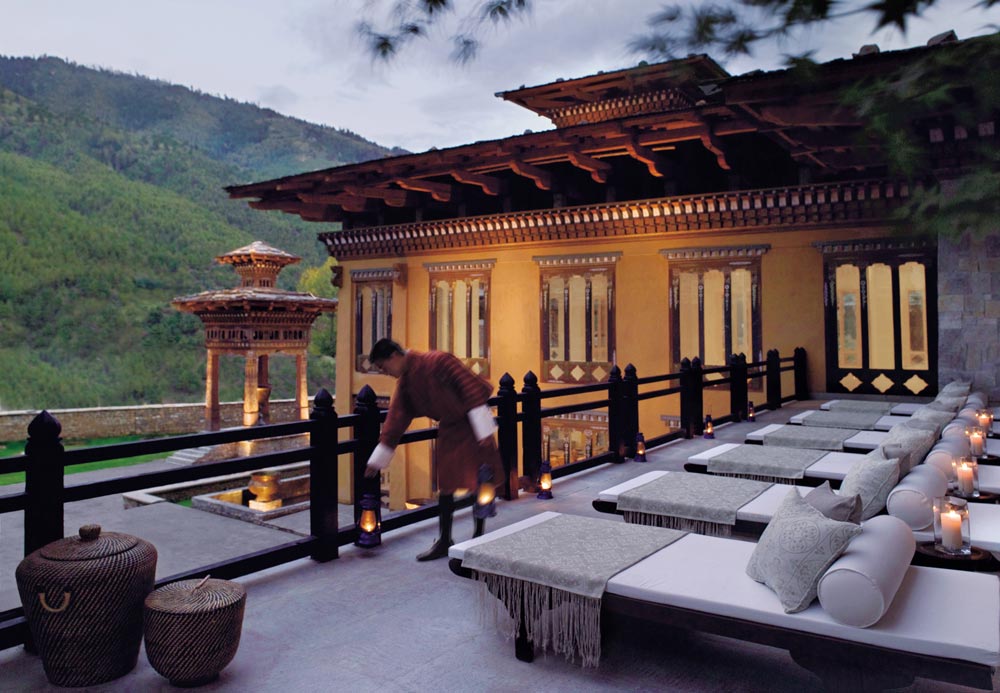
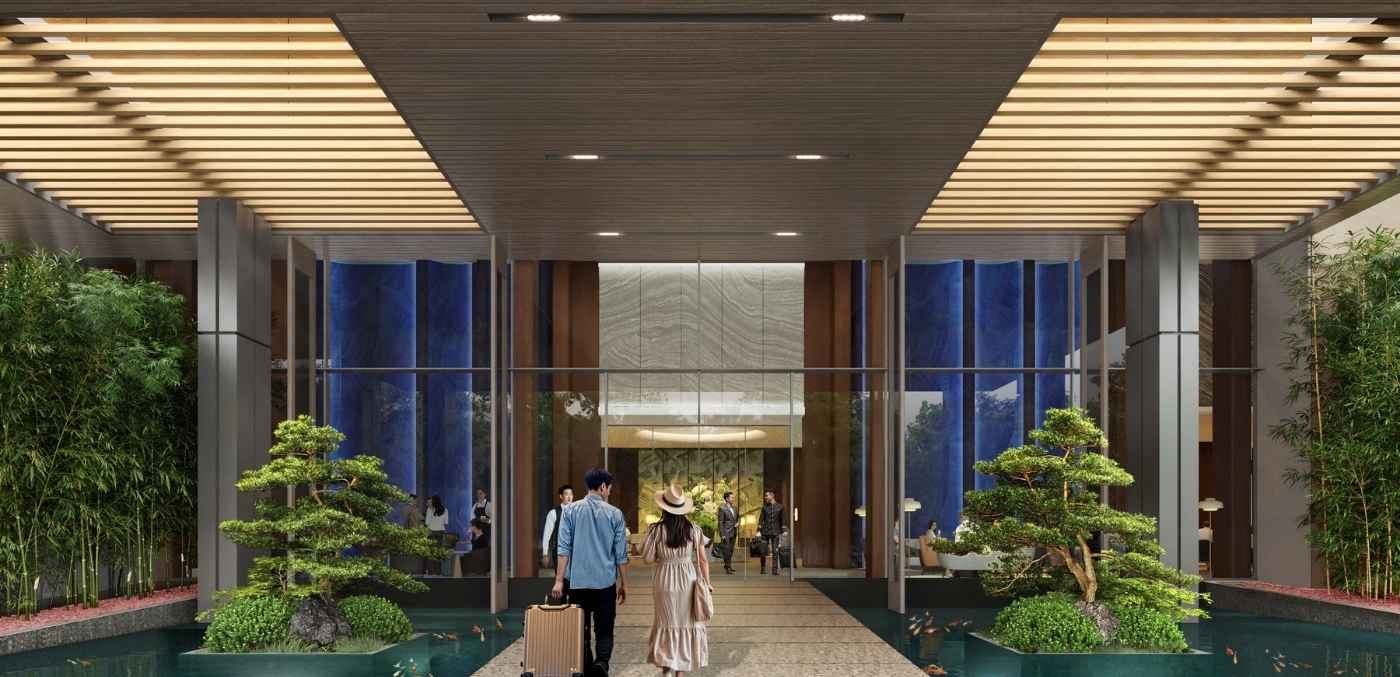
Our hotel, Zhiwaling Heritage, is wholly Bhutanese-owned and designed, a masterpiece of carved timber and hand-laid stone that blends tradition with comfort. The architecture reflects the five stages of enlightenment, the main temple incorporates 450-year-old timbers, and the spa offers an equally meditative escape. Surrounded by mountains and fresh air, it’s a place where luxury and cultural authenticity live in harmony.
Eternal enlightenment
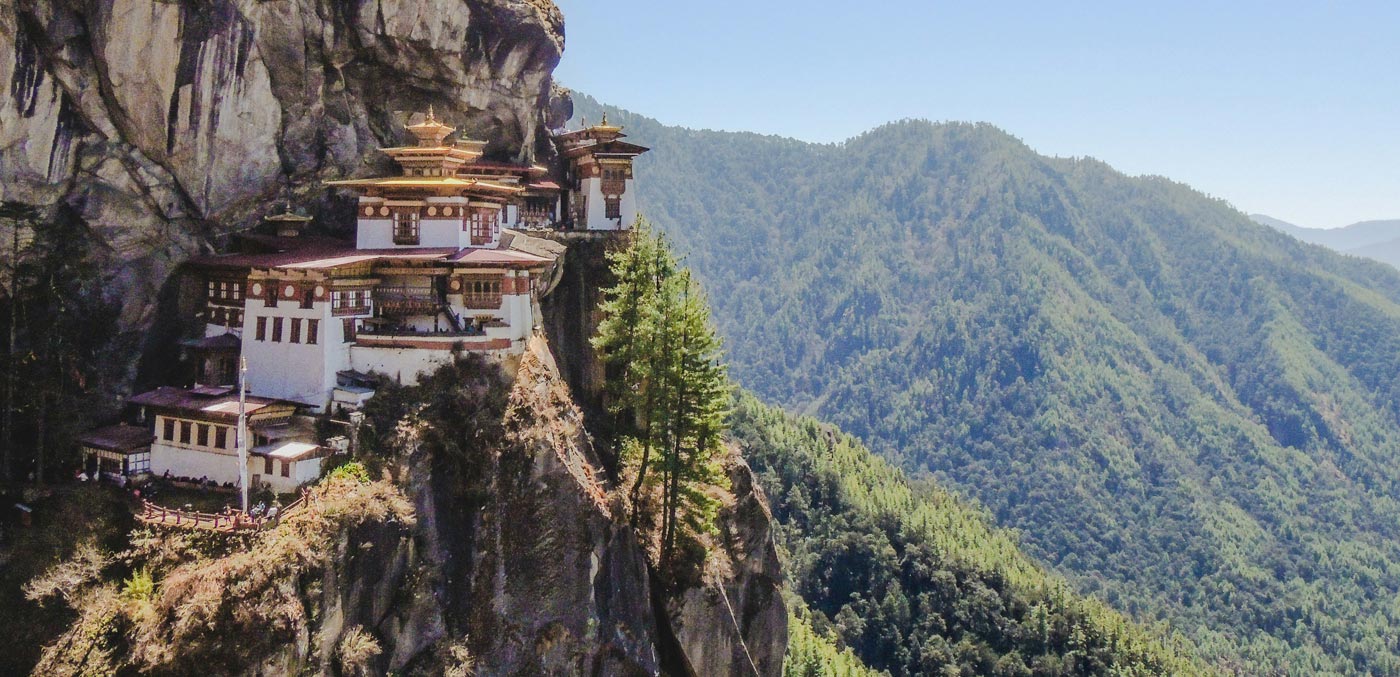
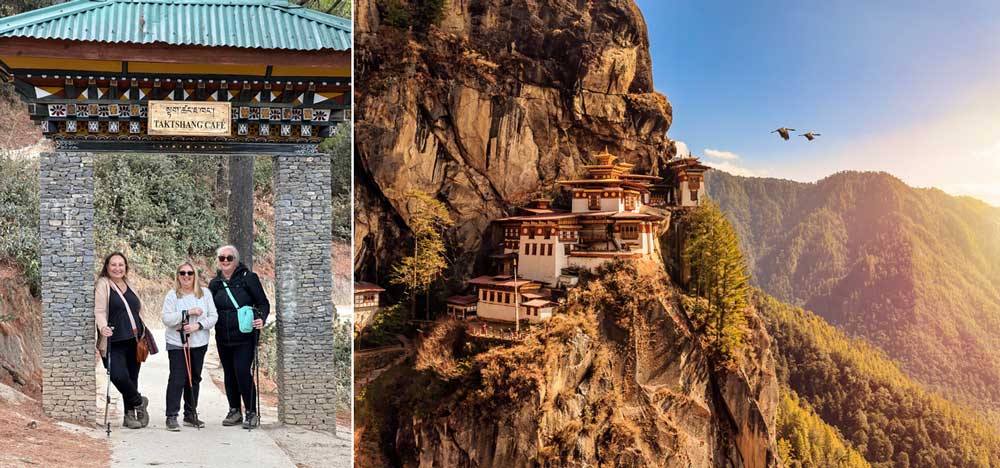
Every Bhutan journey leads to Taktsang, the fabled ‘Tiger’s Nest Monastery’, clinging impossibly to a cliff 915m above the valley. Legend says Guru Rinpoche arrived here on the back of a flying tigress and meditated in a cave for three months. The path begins in pine forest, prayer flags snapping in the wind, and quickly steepens. Many visitors hire donkeys for the first half, stopping at the cafeteria mid-way, and it’s here I pause too, content to take in the panoramic view of the monastery across the gorge.
Around me, strangers exchange ages and stories; elderly locals stride past with the ease of lifelong pilgrims. Beyond lies a final ascent of 700 stone steps, but even from here the sight of its golden roofs poised against sheer rock is worth every breath.
Bhutan is a country of small, luminous moments. Watching elderly women spin prayer wheels at the Memorial Chorten in Thimphu, seeing Bap’s pride as he explains the meaning behind his national dress, passing roadside stalls laden with fresh local produce: fiery red chillies, dried Ema Datshi paste (chilli cheese), yak chilli snacks and steaming cups of suja, a salty, buttery tea. Crossing paths with long-eyelashed cows that have right of way. Watching men in traditional gho take aim on grassy fields, their arrows flying towards distant wooden targets in Bhutan’s national sport, archery.
It’s also a land of numbers: three-quarters of its forests intact; 1000 glacial lakes; a daily tourism fee that funds healthcare, education and conservation. Bhutan is the world’s only carbon-negative nation, a reminder that environmental guardianship is not an aspiration here, but a way of life.
On our final evening, we sit beneath the carved beams of Zhiwaling’s main hall as the light fades beyond the mountains. There’s a profound stillness, broken only by the gentle whisper of prayer flags outside. In five days, I’ve climbed monastery steps, shared tea with strangers, learned greetings in Dzongkha (‘kuzuzangpo’) and seen a kingdom that measures its wealth in joy. Bhutan isn’t a place you simply visit. It’s a place that inhabits you, quietly and deeply, long after you’ve left its valleys behind.
Visit Bhutan with Ventours
At Ventours, every itinerary is a handcrafted masterpiece. From private dinners with royalty and champagne breakfasts overlooking Mount Everest to exclusive wildlife safaris and spiritual encounters. Trusted by distinguished partners such as National Geographic Private Jet Expeditions, TCS World Travel, Oceania Cruises, Guggenheim and Met Museums and other leading institutions, Ventours prides itself on creating immersive, personalised experiences across South Asia — where every journey becomes a story worth telling.
Cathy Wagstaff travelled to Nepal & Bhutan as a guest of Ventours International and Journeys Representation.
This article originally appeared in volume 52 of Signature Luxury Travel & Style magazine. Subscribe to the latest issue today.