




This is the ultimate guide to Japanese onsen, from where to go and which bath house to choose to what you can expect once there.
The Land of the Rising Sun is a volcanic archipelago of geothermal activity that creates naturally occurring wellsprings across the country. Japan has more hot springs than any other nation, a fact that has seen public bathing become an integral part of Japan’s traditional culture, with more than 3000 bathhouses spread across the islands. Visitors seeking an authentic immersion into Japanese culture should add a day trip to an onsen town to their travel itinerary – but it’s essential to do your research first.
What is a Japanese onsen?
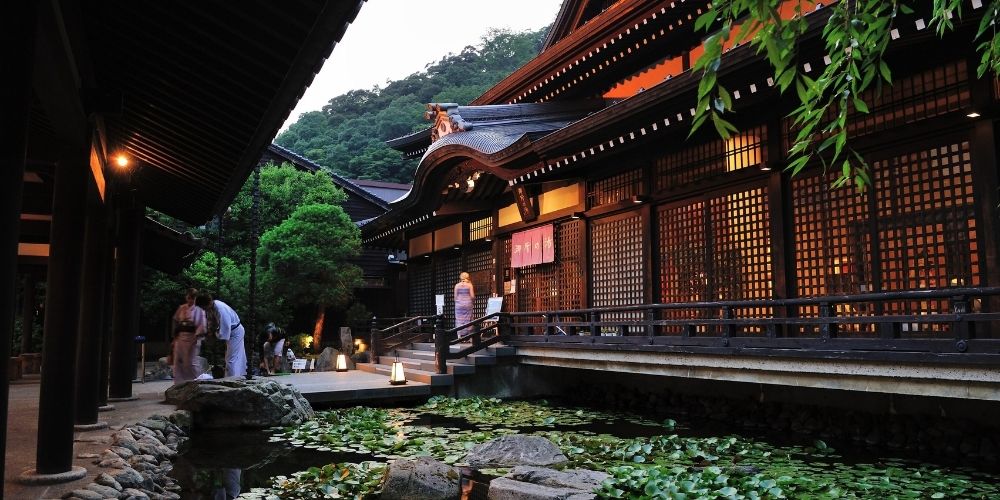
An onsen is a bathing facility built upon a natural geothermal water reserve. The purpose of visiting these bath houses is not so much to wash, but to relax and restore the body. You can spot an onsen by looking for doors covered by drapes at the entrance and a sign with a symbol that looks like steam rising from a bath or hot spring.
What are the benefits of visiting a Japanese onsen?
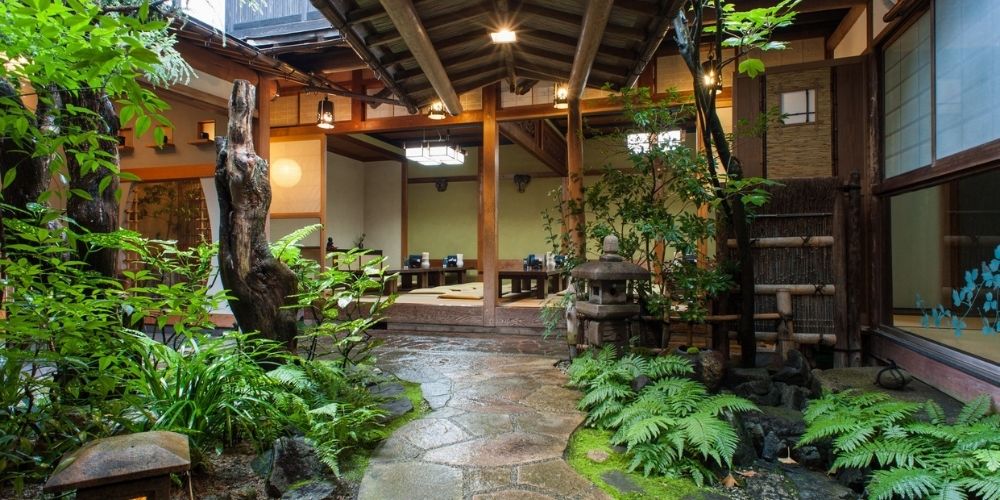
The mineral-rich water pumped up from the earth is enriched with minerals, such as calcium, sodium bicarbonate, sulphur, and iron, that are believed to relieve muscle tension, reduce pain, improve circulation and increase the metabolic rate. The general experience is also believed to clear the mind and reduce stress or anxiety.
What types of onsen are there?
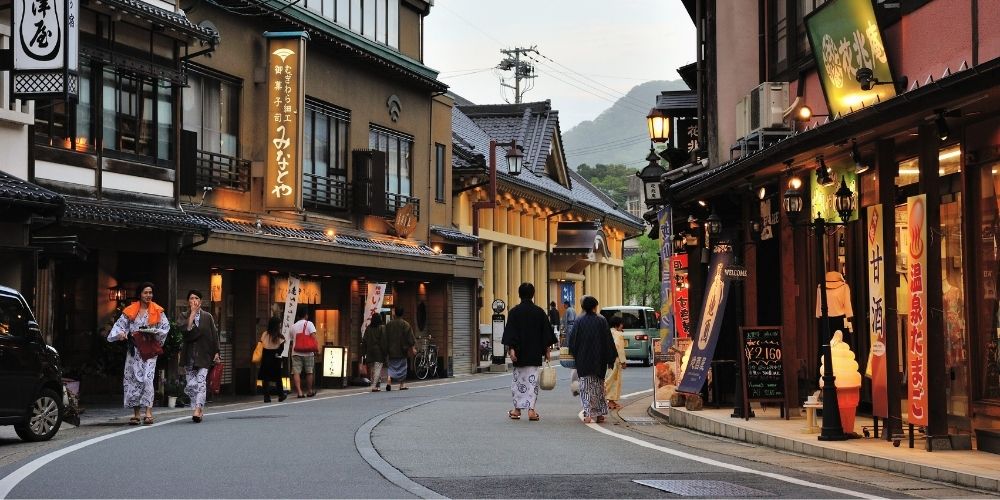
There are a variety of Japanese onsen and bathhouses, each one slightly different from the next. Onsen must be warmer than 25 degrees Celsius and contain at least one of the 19 elements designated in Japanese onsen law, such as lithium, sodium, chloride, etc. Establishments that meet such requirements with water sourced from geothermal springs are known as tennen onsen, while those that are man-made are known as jinko-onsen.
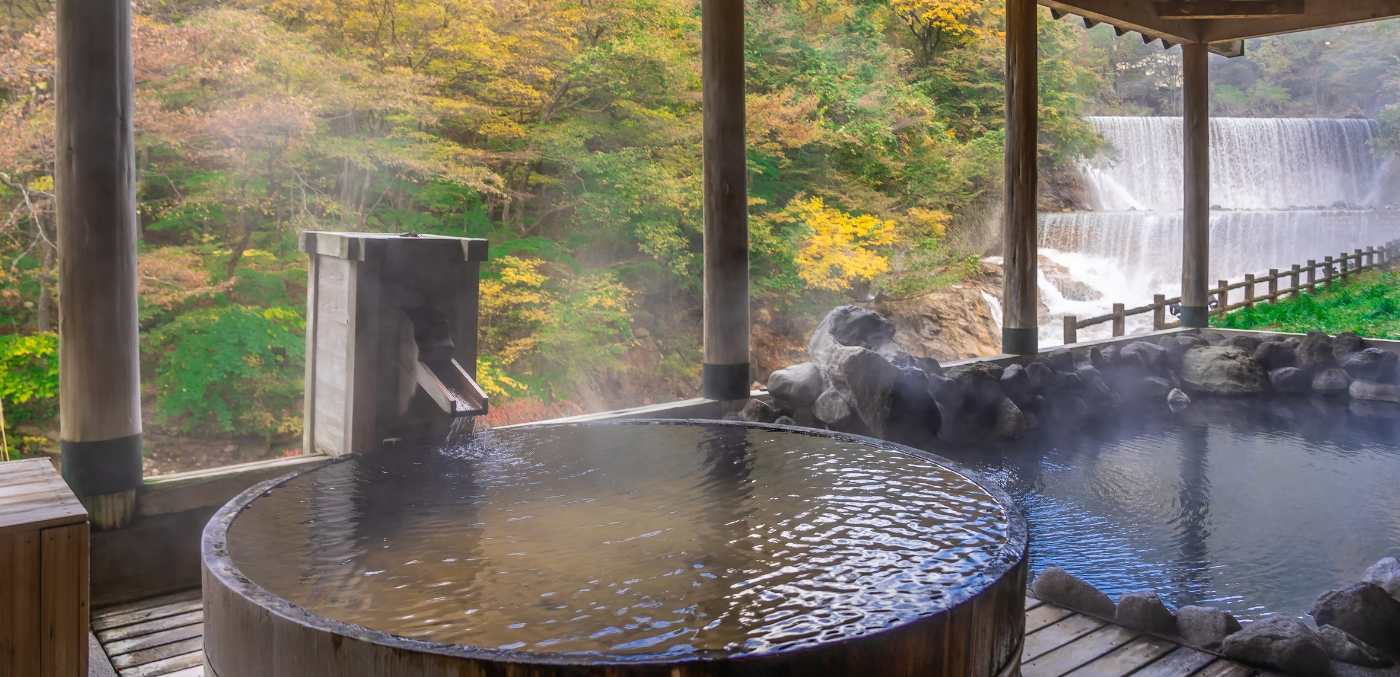
- Roten-buro is an outdoor onsen sometimes also known as noten-buro.
- Sento is a public bath that uses regular heated tap water.
- Super-sento is a large public bathhouse offering facilities such as themed baths, saunas, massages, restaurants and relaxation areas.
- Dai-yokujo is a large communal bath found in hotels or ryokans that can sometimes be referred to as yokujo.
- Ashi-yu is a free foot bath commonly found in onsen villages and resort towns.
- Utase-yu features cascading water where bathers sit beneath it for a massage-like effect.
- Mizu-buro is a cold bath typically located next to the main bath in onsen or sento.
- Kashikiri-buro is a private or reserved bath, often offered by upscale hotels and ryokans, sometimes called kazoku-buro.
Private onsen and ryokan
Businesses that offer private onsen experiences are best suited to couples who wish the bathe together or those uncomfortable with the lack of modesty in traditional bathhouses. Private onsen are often available at ryokans (Japanese onsen inns), where the private bath comes with the room, or a smaller bath is available for private bookings.
How much does an onsen visit cost?
Onsen entrance fees range anywhere from JPY 200 to 2,000.
Japanese onsen etiquette rules
Is your onsen of choice for men, women or both?
Japanese onsen do not always cater to both men and women. While some larger bathing houses have a change room and pools for each, smaller bath houses may have set times for men and women. Be sure to check ahead of time.
Remove your shoes
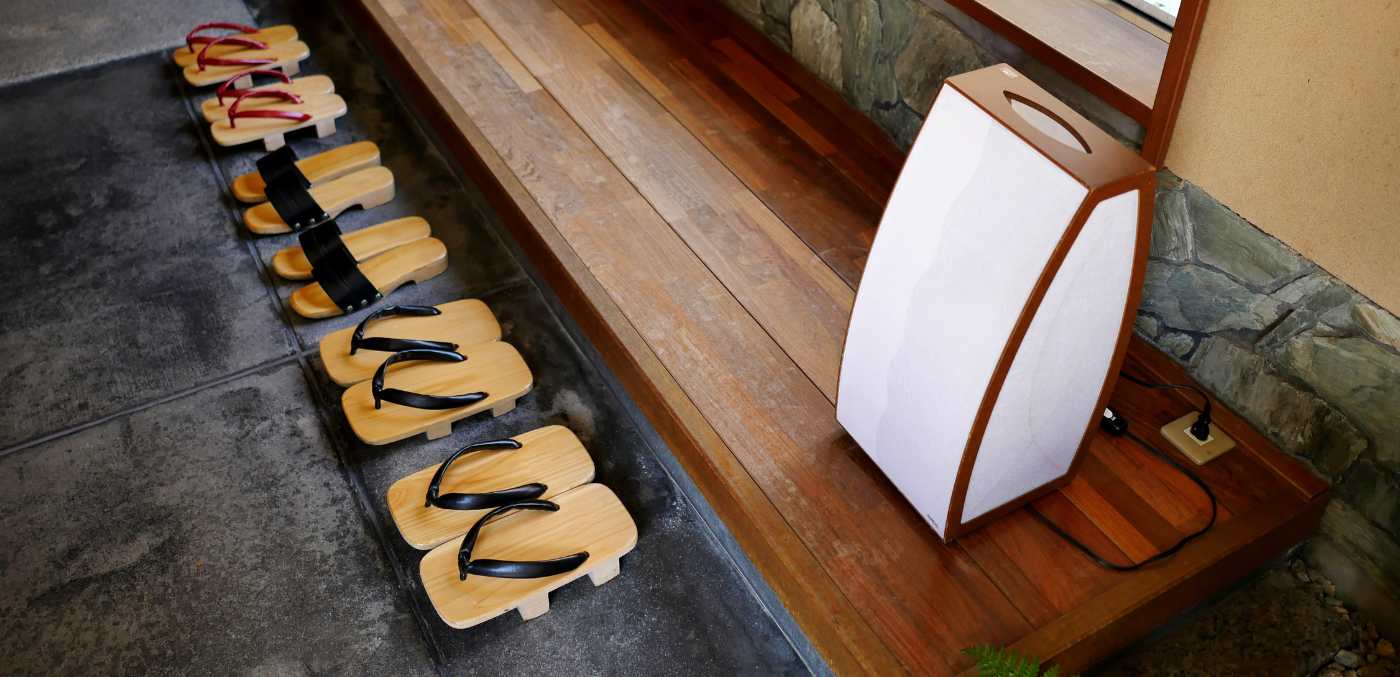
‘Outside’ shoes must be removed before entering an onsen, and guests are provided with ‘indoor’ slippers that can be worn throughout the facility. These are most often found at the entrance to change rooms. You may see a line of shoes outside the onsen, this is where you can leave your footwear – face them away from the onsen for easy access upon your exit.
Check your changing room
Men and women’s change rooms are separated at most Japanese onsen. Men’s quarters typically feature blue curtains, while women’s are designated with red curtains. Store your belongings in the provided baskets, but remember upside-down baskets are clean and redy for use, while right side-up are in use. Grooming tools such as combs, hairdryers and other amenities are often provided for guests to use.
Onsens usually require full nudity and tattoos are forbidden
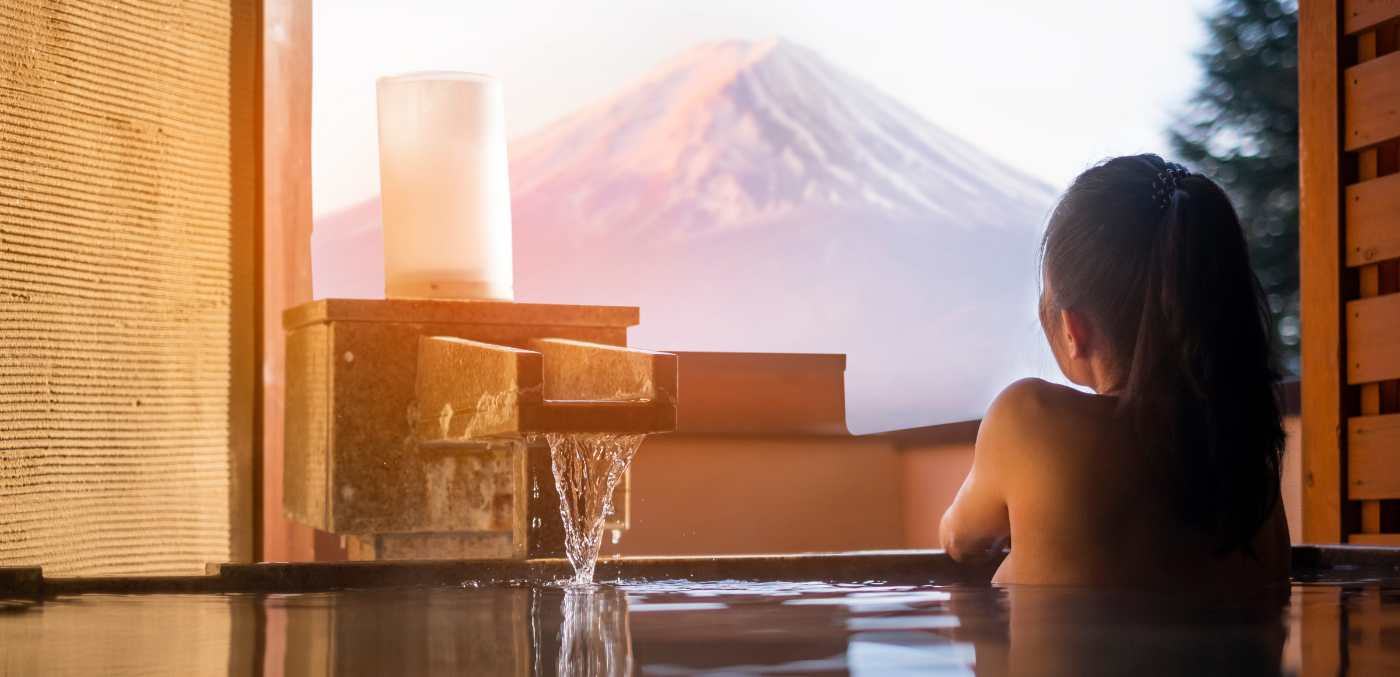
Japanese onsen is different to your typical Western day spa, and these traditional establishments are governed by cultural principles. Full nudity is usually required within the bathing room and tattoed individuals are usually prohibited from entering. However, some onsens now allow people with tattoos and cater to modest visitors. It’s best to research and call ahead to confirm. Swimsuits are not allowed. Occasionally, if the onsen is unisex, guests are allowed to wear a cover-up.
Do you wear clothes in a Japanese onsen
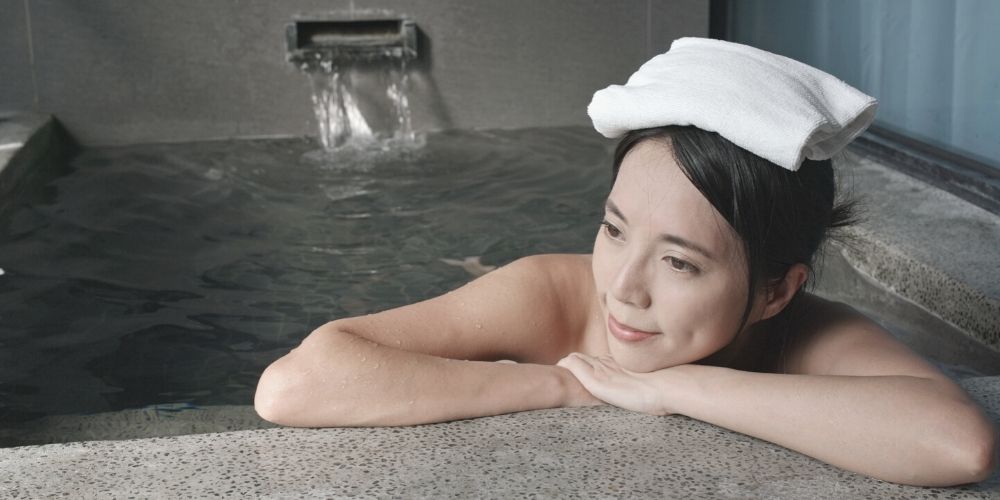
Guests are given small washcloths with which to preserve their modesty while moving from the changing rooms to the bathing rooms. These are the only items you are allowed to carry into the Japanese onsen, and your towel should never come into contact with the water in the baths. These towels are usually the size of a washer or small hand towel and are used for removing excess water when you step out of the baths. Japanese people often place the towel on their heads when they bathe to help cool down the head while enjoying the heat on the rest of the body. Most places provide towels for free or for a small fee, but when in doubt, bring your own. Use one of the small bamboo buckets to hold the towel when you take it to the shower room and into the onsen.
What to do if you’re given a yukata
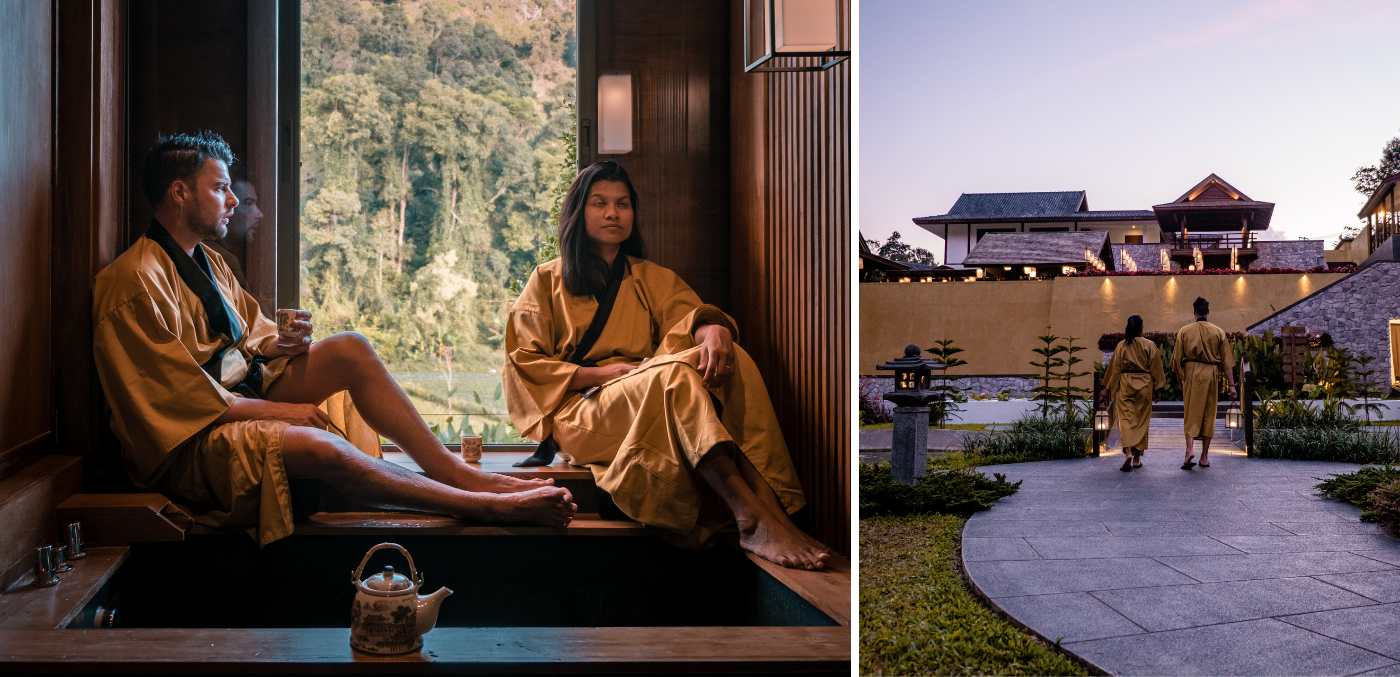
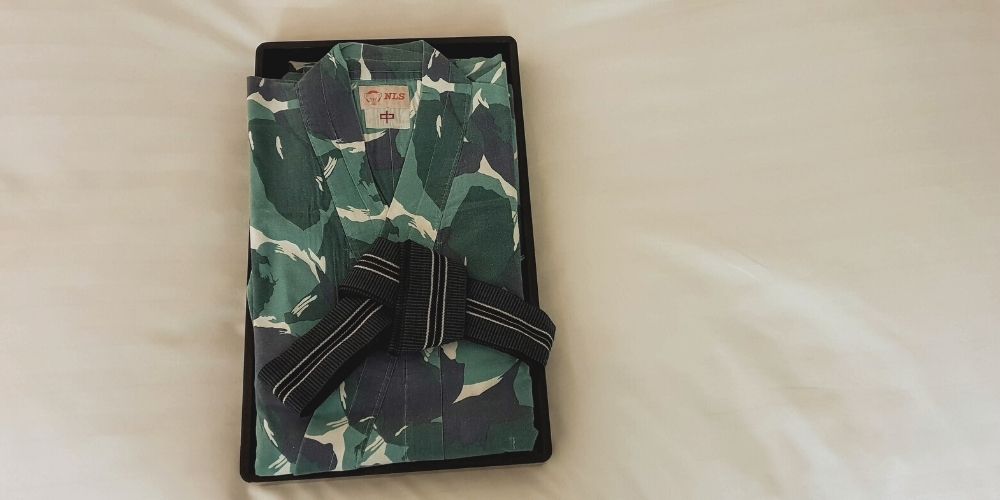
A yukata is a loose, draped garment similar to a dressing gown made from cotton or a similar fabric. It is often worn before and after your visit to the bathing area, and between other facilities such as massage or relaxing areas.
Always shower first
A Japanese onsen caters to many people and all walks of life, so it’s essential that the facilities are kept clean and the water pure. Guests are expected to use the provided showers before entering the hot springs. Sit on the small stool provided, soap up, and rinse off. Women should tie up long hair to keep it out of the water.
Limit your stay
Traditional bathhouses are built on hot springs fed by geothermal water reserves from within the earth. As such, the water is enriched with vitamins and minerals that are believed to have both physical and mental health benefits for those who soak. However, these pools are hot and can cause dehydration in people who don’t drink enough water during their visit, or stay submerged for too long. Be sure to drink plenty of water.
Keep it down
Visitors are more than welcome to chat with their bathing companions, however, the noise level must be kept to a minimum to preserve the tranquillity of the Japanese onsen for other guests. Similarly, diving, splashing and swimming are not allowed in the hot springs.
Maintain personal space
Many people visit Japanese onsen to relax and find a sense of peace, and it’s hard to do that if someone is cramping your space. Be sure to keep a polite distance between yourself and other bathers and keep eye contact brief.
Move between pools
Depending on the type of Japanese onsen you are visiting, there may be a variety of pools with different mineral compositions. Guests are welcome to move between pools (check if there are different fees for each) and it isn’t necessary to shower between dips.
After your bath…
It’s recommended that guests do not shower after bathing so that the minerals in the pools can soak into your skin. Those looking to reinvigorate the senses should opt for the post-bath cold rinse.
10 of the best places to experience traditional Japanese onsen
Kurokawa, Kumamoto
Known for its picturesque locale, this 300-year-old town in Kyushu boasts more than 30 onsen facilities.
Kinosaki, Hyogo
Both locals and visitors are welcomed with open arms in this town, where all seven of the onsen are tattoo-friendly.
Beppu, Oita
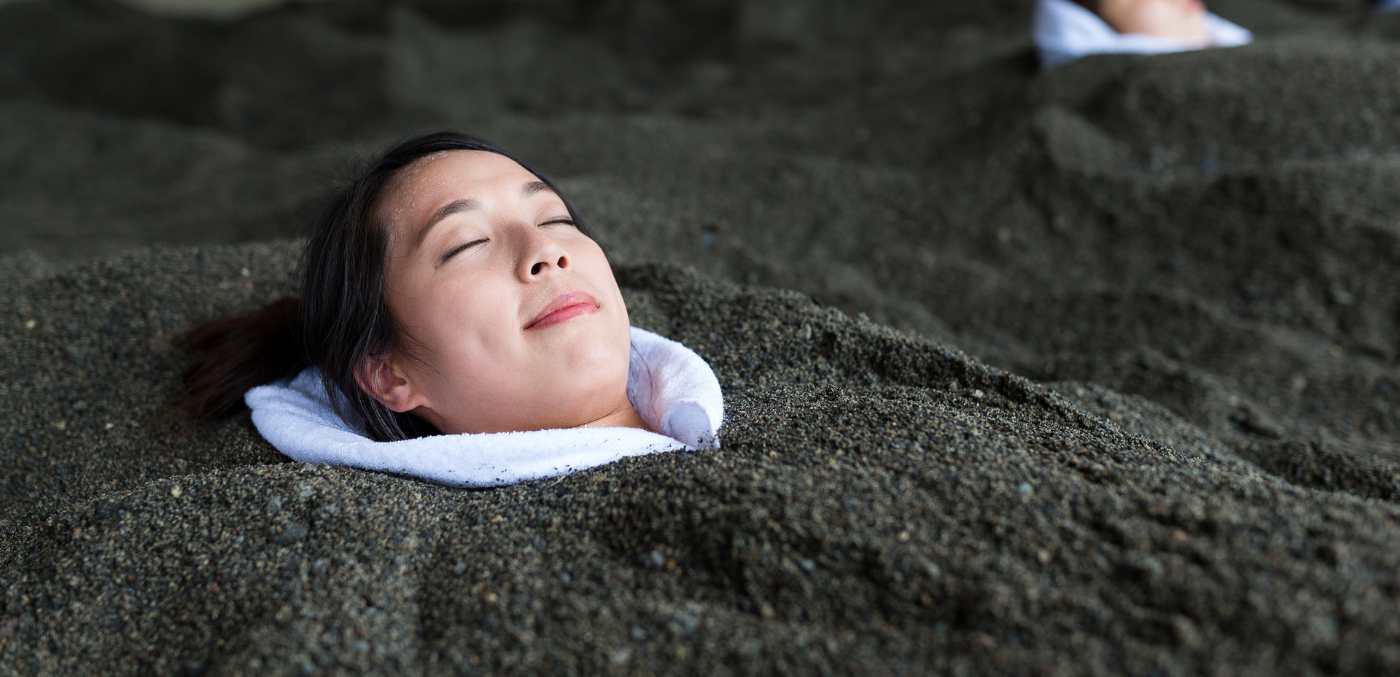
Known as the hot spring capital of Japan, Beppu is located on Kyushu island and is home to several onsen resorts that also offer mud, steam and sand baths.
Ginzan, Yamagata
Ginzan River is lined with traditional wooden buildings and in winter, snow blankets the entire town. It’s a Japanese fairytale complete with alfresco winter bathing.
Kusatsu, Gunma
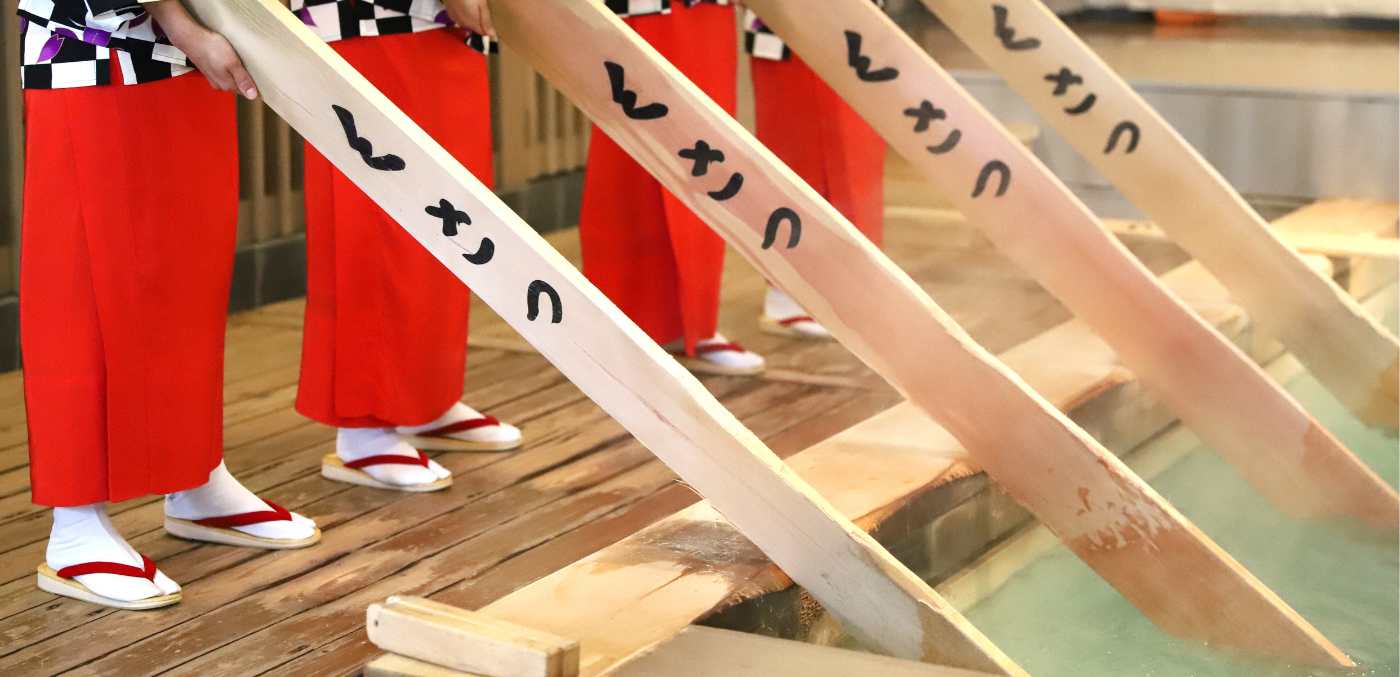
Blessed with large volumes of piping-hot spring water, Kusatsu is one of Japan’s most famous bathing destinations, known for its yumomi water-cooling performances.
Hakone, Kanagawa
With more than 12 hot spring sources, Hakone is home to many bathhouses and ryokan. The largest hot spring town in the region is Yumoto, regarded for its long history, premium water and variety of onsens.
Yumoto, Nikko
Disappear into the depths of Nikko National Park and immerse yourself in the steamy springs set among snowy peaks.
Noboribetsu, Hokkaido
Accessible from Tokyo, Noboribetsu’s waters contain high amounts of sulphur, hydrogen sulfide and iron, believed to soften skin and reduce fatigue.
Dogo, Matsuyama
Dogo is the oldest onsen in Japan, dating back 3000 years. The castle-like bath house and its ryokans inspired elements of Studio Ghibli’s Spirited Away.
Yufuin, Oita
Located close to Beppu, Yufuin is an easy town to traverse on foot and the hot spring facilities are framed by shops, cafes and museums.
Read more:
- Signature’s curated guide to Japan
- Best spas in Japan
- A guide to Japanese onsen
- Stay in Ozu Castle
- Guide to Kanazawa
- GranClass: Japan’s first-class shinkansen cabin
- ANA Lounge Haneda Airport review
This article is a Signature Luxury Travel & Style digital exclusive. Be the first to see more exclusive online content by subscribing to the enewsletter below.